Dear colleagues,
This period marked a transformative chapter for our Alliance. Following the First Elective Congress in Buenos Aires in May 2024 and our first in-person Executive Council meeting in Kathmandu that September, the IAWP entered a new phase of democratic leadership, institutional consolidation, effective international advocacy and successful fundraising. Here is what we achieved together.
Our Growing Alliance
We are now 59 affiliates across 38 countries, representing 466,256 waste pickers. Since October 2024, nine new organisations have joined us, bringing 2,834 workers into the Alliance: TAWAPA (Tanzania), ZWPP (Zimbabwe) and UDFAPD (Ivory Coast) in Africa; Balmiki Samaj (Nepal), LIE (Bangladesh) and three organisations in the Philippines in Asia-Pacific; and RENARBOL (Bolivia) in Latin America. A tenth application, from Cambodia’s IDEA with 1,000 members, awaits Executive Council approval.
With IAWP support, new national movements were also established in Mexico, Nicaragua and Guatemala, and every region continues cultivating relationships with potential affiliates.
Democratic Governance
The Executive Council met regularly online and twice in person, in Kathmandu and in Jakarta in April 2026. It approved our work plans and budgets through to December 2027 and passed seven new resolutions, on strengthening the recycling movement, Fair Trade, threats of privatisation, corruption, dumpsite closures, IAWP registration and associate membership.
The Alliance now works through five subcommittees: Advocacy, Communications and Workers’ Education (two members per region), plus Human Resources and Finance (one member per region). At least half of every subcommittee’s members are women.
Advocacy on the World Stage
UN Plastics Treaty
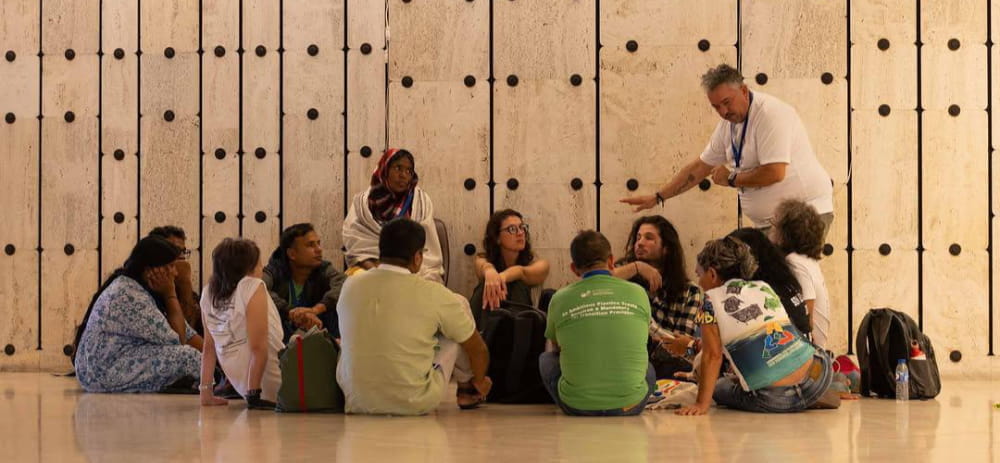
At INC-5.1 in Busan and INC-5.2 in Geneva, we met representatives from dozens of member states, strengthened ties with indigenous peoples, trade unions and environmental organisations, and shared recommendations on the treaty’s financial mechanism. Over 100 countries publicly supported a mandatory just transition provision. We remain deeply disappointed that member states failed to reach agreement, and we call on them to fix the process ahead of INC-5.3, expected in early 2027. Meanwhile, our delegation took the case for reuse- and repair-based economies to UNEA-7 in Nairobi.
A Historic Step at the ILO
In May 2025, the ITUC invited our President and Advocacy Coordinator to serve as expert contributors to ILO negotiations on decent work in recycling. That November, the ILO formally adopted its Policy Guidelines for the Promotion of Decent Work in Recycling, which explicitly reference waste pickers and our organisations, and affirm the social and solidarity economy as a valid model.
In March 2026 the ILO accepted IAWP’s registration. In June, for the first time, we attended the International Labour Conference with our own badge.
Climate Change
Waste pickers recover more than 100 million tonnes of waste every year. Our technical brief with WIEGO, Mitigating from the Margins, shows we help avoid between 0.17 and 0.39 billion tonnes of CO₂-equivalent emissions annually. Armed with this evidence, waste picker leaders from Brazil, Chile, Nigeria, South Africa and Argentina spoke at COP30 in Belém, where we witnessed a breakthrough for informal economy workers: recognition in a COP decision for the very first time.
Research and Publications
We published a wave of reports on Extended Producer Responsibility, reuse and repair, led by Bridging the Gap with GRID-Arendal, alongside country studies on South Africa, Brazil and India and research on reuse economies in Italy and Ecuador.
Workers’ Education
The Workers’ Education Subcommittee moved beyond simple training, developing worker-led content that connects everyday realities with political analysis and leadership. Five courses are in development, and worker-educators drawn from our own ranks are being trained through workshops inside affiliates themselves.
In May and August 2025, two peer-to-peer exchanges on dumpsite closures brought together voices from over fifteen countries, leading to our Collective Political Statement on Dumpsite Closures and a new Executive Council resolution.
A growing catalogue of free, self-paced virtual courses now covers rights, occupational health and safety, digital literacy, communications and fundraising. Explore them all at our Workers’ Education resources page.
Communications
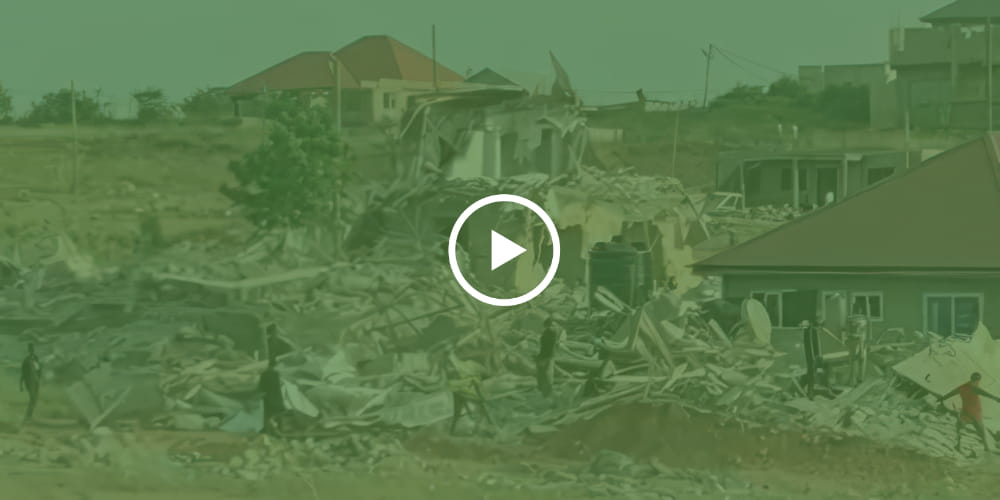
In April 2026, in Jakarta, we launched our new website, with improved visuals and browseability under the wastepickersinternational.org domain. Every 1 March, we marked International Waste Pickers’ Day with mobilisations across the world, honouring those who lost their lives in Colombia in 1992. The Alliance also spoke with one voice through joint statements, from the World Circular Economy Forum to solidarity with waste pickers affected by demolitions in Ghana, and adopted new internal policies on artificial intelligence, data security and digital infrastructure governance.
Building the Institution
The Finance Subcommittee met bi-monthly and adopted new policies on reserves, fundraising, travel and per diem, and equipment depreciation. The Human Resources Subcommittee adopted our first HR Manual, oversaw the recruitment of six new staff members, and resolved a grievance concerning KeNaWPWA’s elections in Kenya, recognising the elected officers as valid. In January 2026, office bearers, subcommittee chairs and staff gathered in Ho Chi Minh City for the Alliance’s first staff appraisal and learning retreat.
Around the Regions
Africa
For the first time in IAWP history, Africa received the largest share of regional investment: 41% of regional funds, correcting years of under-resourcing. In September 2025, thirty-one leaders from thirteen countries met in Accra for the region’s first regional meeting. Eleven affiliates received funds for initiatives they prioritised themselves, and African delegates travelled to Brazil in December 2025, joining Expocatadores and meeting Brazil’s president. The region stood in solidarity with workers facing eviction at Likoni dumpsite in Mombasa and with Ghanaian leaders whose houses were demolished.
Asia Pacific
Three learning exchanges carried leaders across borders, from Nepal to Bangladesh, from the Philippines and Nepal to India, and from Bangladesh to Indonesia, while subgrants supported initiatives in eight countries. After relentless advocacy by AIW, India launched the NAMASTE scheme recognising and supporting waste pickers. When Indonesia decided to close 343 dumpsites, we stood with the affected workers.
Europe
A mapping initiative across Albania, Romania, Bulgaria, North Macedonia and Kosovo brought Romania and North Macedonia in as new observer countries. In Brussels, hosted by the Brazilian Embassy, waste pickers from across Europe gathered for the first time to shape a common advocacy strategy, while the catador.it journal in Italy, a communications campaign in France and organising work in Türkiye brought visibility and dignity on the ground.
Latin America & the Caribbean
REDLACRE consolidated four national movements in Central America and strengthened organisations in Peru and Uruguay, developing its strategic plan towards 2030. In March 2026, after incessant pressure from ANR, Colombia approved Decree 0271, establishing a social security system for waste pickers.
North America
In October 2025, Binners’ Project hosted the third NAWPA Regional Exchange in Vancouver, which launched the region’s first website at nawpa.org. In May 2025, after advocacy by Ground Score Association, Oregon passed a landmark bill recognising waste pickers and financing depots run by and for them.
A Seat at the Table
The Alliance now advises the Fair Circularity Initiative, The Circulate Initiative’s Responsible Sourcing Initiative and the Second-Hand Material Flow Roadmap to Action. Waste picker leaders spoke everywhere from a United Nations hearing on plastics and human rights to New York Climate Week, the 5th World Meeting of Popular Movements convened by Pope Leo XIV at the Vatican, and King Charles III’s International Sustainability Reception at Buckingham Palace.
Looking Ahead
In two years, the IAWP has become a consolidated, democratically led alliance with a voice in the rooms that matter. With a work plan and budget approved through December 2027, the foundation for the next chapter is already in place. Thank you for building this movement with us.
In solidarity,
The International Alliance of Waste Pickers