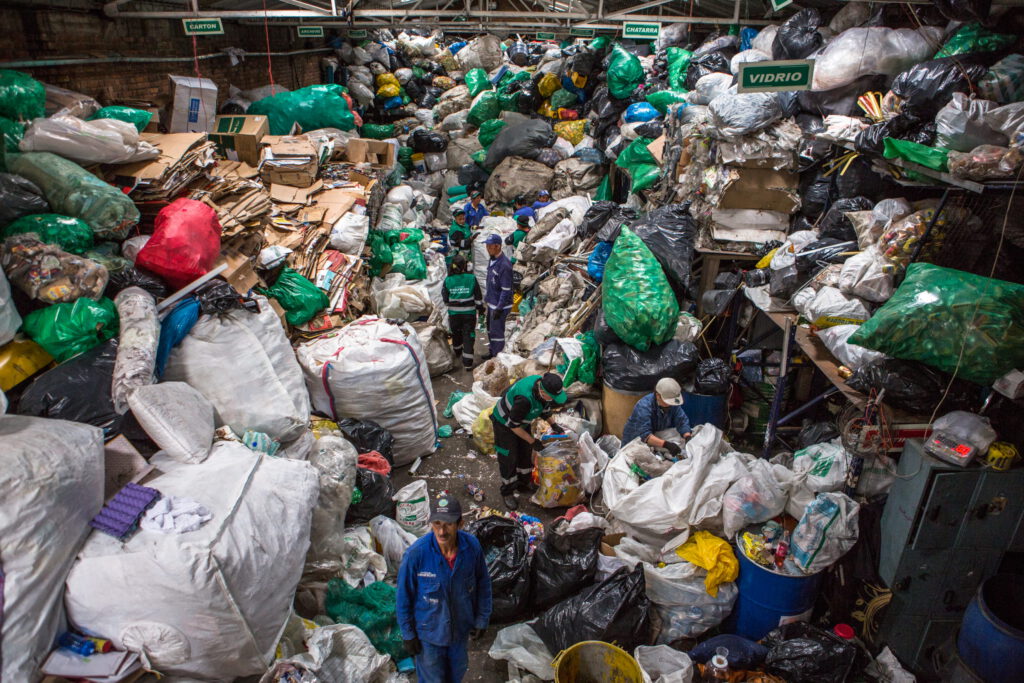

WHEREAS for generations, waste pickers have served as the frontline architects of resource recovery, sustaining recycling systems long before formal policies existed ; yet today, across the world, dumpsite closures are accelerating under the banners of modernisation, climate action, and urban development ; and whereas these closures are being arbitrarily implemented without consultation or guarantees, threatening to erase the historical livelihoods of those who have spent decades reclaiming materials for the benefit of the planet;
AND WHEREAS these processes systematically result in forced displacement, loss of livelihoods, criminalisation, and the transfer of recoverable, reusable and recyclable materials to private actors ; as documented recently by IAWP affiliates in regions including Kenya, Indonesia, Senegal, and Ghana;
THE EXECUTIVE COUNCIL HEREBY DECLARES:
1. A Global Policy Position
We reject all dumpsite closures that:
- Exclude waste pickers from decision-making processes;
- Result in the loss of livelihoods or restricted access to materials;
- Are imposed without prior consultation and meaningful participation;
- Promote privatisation models that dispossess workers of their livelihoods and earnings.
We affirm that waste pickers are essential environmental workers. No closure is legitimate without the full participation of waste pickers from the outset in the design and planning of alternative livelihood pathways. Any dumpsite closure that fails to ensure a just transition effectively displaces waste pickers from their livelihoods and pushes them further into poverty.
2. A Call to Governments, Institutions, and Private Actors
We demand that all authorities and stakeholders:
- Recognise waste pickers as workers with fundamental rights;
- Guarantee participation in the planning, implementation, and monitoring of any materials management system reform;
- Ensure the continuity of work and income for all affected workers through comparable, satisfactory, and accessible schemes;
- Protect access to reusable and recyclable materials and their respective value chains;
- Cease all forms of repression, criminalisation, and forced evictions.
Any process failing to meet these conditions will be met with collective resistance.
3. A Call for Alliances and Collective Struggle
We call upon trade unions, social movements, environmental and climate justice organisations, and human rights institutions to stand with waste pickers. We defend:
- The right to work;
- The right to the city as our home and place of work;
- The right to participate in shaping materials management systems.
Dumpsite closures are not merely a waste issue; they are a matter of labour, social justice, and environmental justice.
4. Our Global Narrative
We reject the false narrative that presents waste pickers as a problem. We affirm that:
- Waste pickers sustained reuse and recycling systems long before formal policies existed;
- Cities and climate goals depend upon our work;
- A world without waste pickers is a world with more waste and less justice.
THE EXECUTIVE COUNCIL FURTHER RESOLVES:
5. To Establish a Coordinated Global Response
The Alliance shall create a rapid response mechanism to support affiliates facing dumpsite closures. This includes:
- Issuing urgent political statements and supporting affiliates in corresponding with public authorities and multilateral institutions, including outreach to the municipalities;
- Strengthening the communication and visibility of these struggles.
6. To Mandate a Collective Training Strategy
The Workers’ Education Subcommittee (WESC) is mandated to:
- Develop and implement training on collective bargaining regarding dumpsite closures;
- Strengthen capacities in negotiation, legal frameworks, and political advocacy;
- Facilitate peer-to-peer learning exchanges across regions.
7. To Advance a Global Advocacy Strategy
The Alliance, under the leadership of the Advocacy Subcommittee (ASC), will develop an international advocacy plan to engage with governments and multilateral platforms. We will promote binding frameworks that guarantee meaningful inclusion in decision-making regarding closures, alternative livelihoods, and rights.
8. To Systematise and Share Experiences
The Alliance will document cases of resistance and negotiation, identify inclusive transition models, and build a shared repository of strategies and lessons learned.
Donwload in:
Bengali, English, Filipino, French, Hindi, Indonesian, Nepali, Spanish