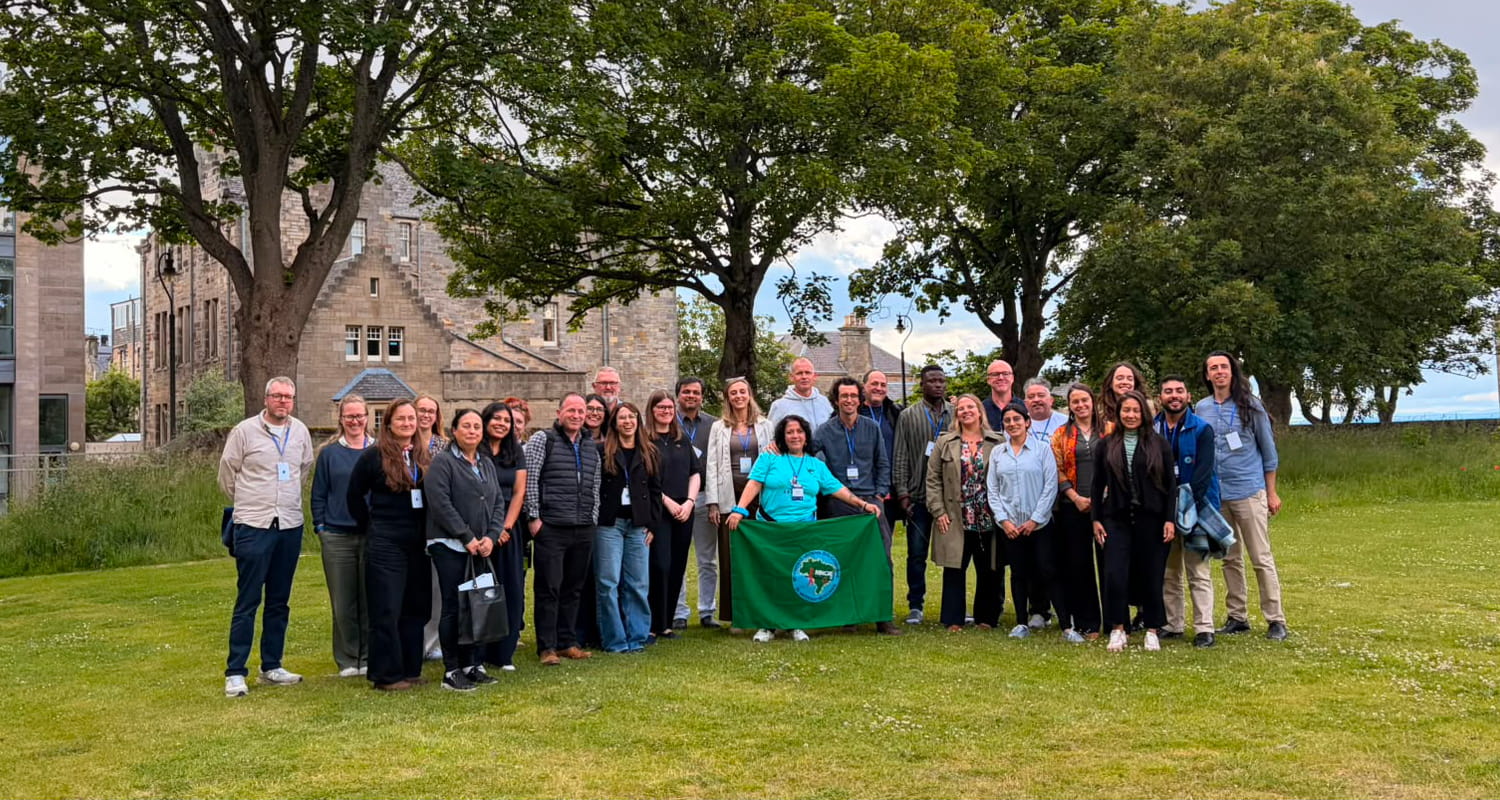
On 13–14 June 2026, a workshop on Just and Sustainable Plastic Waste Management was hosted at the University of St Andrews (Scotland) which brought together academics, policymakers, waste picker representatives, third-sector organisations, and industry stakeholders for two days of lively discussion, knowledge exchange, and collaboration. The participation of representatives and staff members of the International Alliance of Waste Pickers (IAWP) and its affiliate organisations was crucial in ensuring that the workers at the front line of plastic recovery were active in shaping the agenda.
The workshop formed part of the UK Research and Innovation (UKRI) Future Leaders Fellowship project, Bioplastics, Social Plastics, and Just Plastics in a Circular Economy (Grant Ref: MR/Y003853/1) led by Dr Patrick O’Hare. Its aim was to create a space where participants from diverse sectors and regions could explore how plastic waste management systems can become both environmentally sustainable and socially just. The event was exceptionally well attended, attracting participants from across the UK, Europe, Latin America, Africa, and Australia. The diversity of expertise and experience in the room helped generate rich discussions on how to tackle the plastic waste problem. The workshop sought to explore what “just and sustainable” plastic waste management means in practice. In hands-on activities, participants considered how sustainability and justice can be defined, measured, and implemented within waste management systems, while also examining the social, environmental, economic, and governance dimensions of plastic pollution. While plastics continue to play an important role in modern economies, current systems of production, consumption, and disposal contribute to environmental degradation and often place disproportionate burdens on low-income communities and countries in the Global South. At the same time, emerging solutions such as circular economy approaches, reuse systems, extended producer responsibility schemes, and alternative materials raise important questions about effectiveness, scalability, and fairness.
Researchers shared findings from ongoing work examining the role of waste pickers and informal economy waste workers in plastic recycling and reuse systems, highlighting their critical yet often overlooked contribution to resource recovery and recycling. In particular, two reports written in collaboration between Dr Matteo Saltalippi (University of St Andrews) and the IAWP were presented: “Exploring Inclusive Reuse in Ecuador” , presented by Dr Saltalippi and Diego Núñez of the Red Nacional de Recicladores del Ecuador (RENAREC), and “The Role of Waste Pickers in Reuse Economies in Italy”, presented by Dr Saltallipi and Pietro Luppi, a member of IAWP’s Executive Council. Participants explored how lived experiences can inform policy development and implementation, and how more inclusive approaches can help ensure that transitions towards circular economy systems do not inadvertently create new inequalities.
Severino Lima Junior, President of the IAWP, presented the organisation’s history and the vital role of grassroots waste pickers, who face serious challenges despite that role: precarious, informal working conditions without social benefits or job security; a lack of institutional recognition that often keeps them out of formal recycling systems; and limited access to the funding and technology needed to scale up their work. For waste pickers to serve effectively as the final line of defence, Lima Junior argued, they urgently need formal recognition and institutional support, with better working conditions, training, a voice in waste-management decisions, and funding to strengthen recycling infrastructure in vulnerable communities.
Johnson Doe, a member of the IAWP’s Executive Council, presented on the attempts made by waste pickers’ organisations to plan and put forward proposals for a just transition in Accra and to integrate waste pickers into inclusive waste management – despite a lack of sufficient government and private sector support to realise it. A just transition, he stressed, should not replace waste pickers but recognise, partner with, contract, and support them as workers and service providers, enabling waste picker cooperatives to run reuse and buyback centres for long-term sustainability, and including waste pickers in policy discussions.
Discussions examined the current state of negotiations surrounding the Global Plastics Treaty and considered its potential implications for waste management systems worldwide. Soledad Mella, president of the Asociación Nacional de Recicladores de Chile (ANARCH), recalled the fundamental participation of waste pickers during the negotiations, noting that the mention of waste pickers in the draft treaty is a positive and important achievement, but they still need to be genuinely recognised as an integral part of the solutions put in place. She stated that waste pickers not only play a role in waste management but also possess valuable knowledge and experience that must be taken into account in decision-making, in the formulation of public policy, and in the drafting of the treaty itself.
Participants also reflected on the strengths and limitations of existing policy instruments, including extended producer responsibility schemes, and explored examples of successful initiatives aimed at reducing plastic pollution.
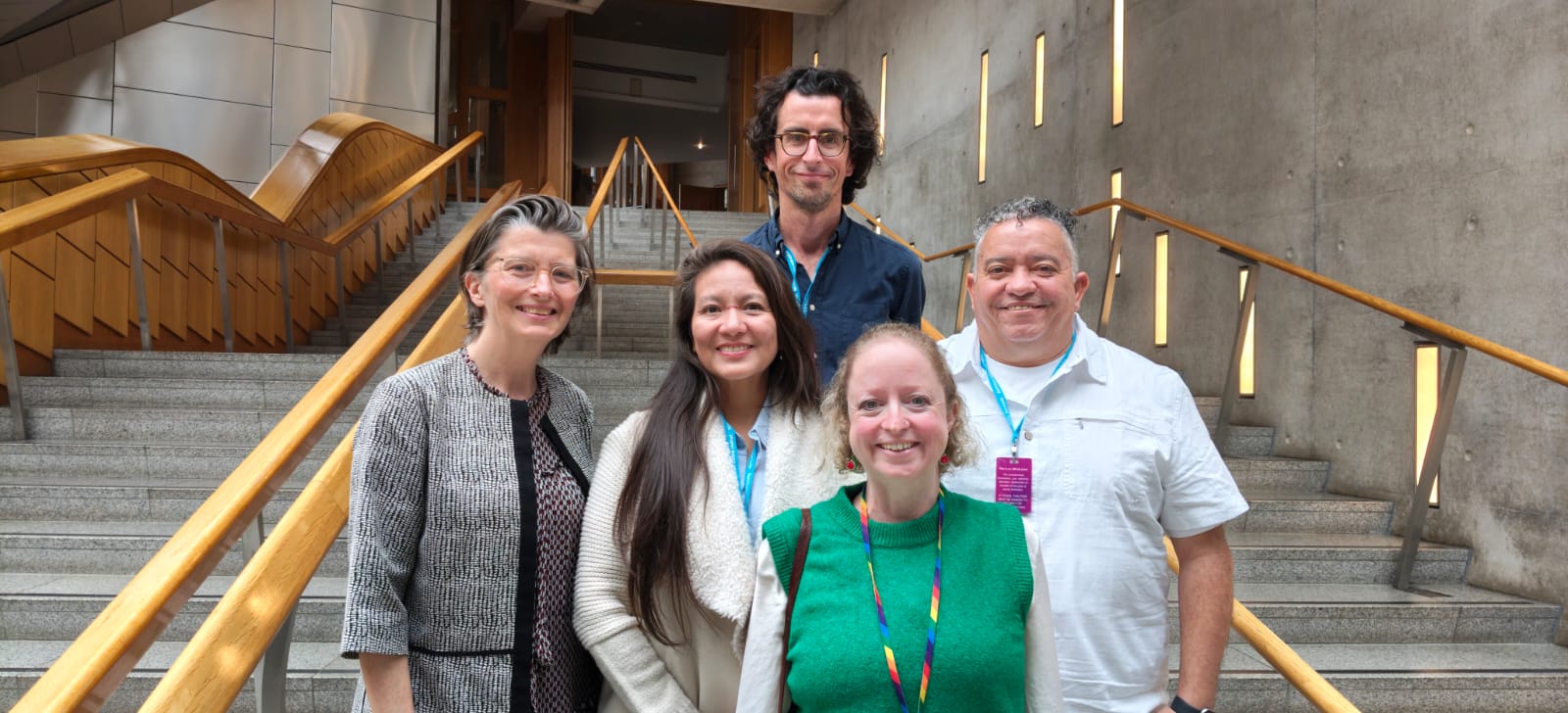
Following the workshop, Dr Patrick O’Hare, Indigenous Leader Dr Lena Estrada, and Severino Lima Junior met with Green Party MSPs in the Scottish Parliament. Ariane Burgess, spokesperson for Rural Affairs, Land Reform and the Marine Environment, Q Manivannan, Culture spokesperson, and Kate Nevens, Equalities and International Development spokesperson headed up the Green Party delegation.