Article by: Nicolas Martinez
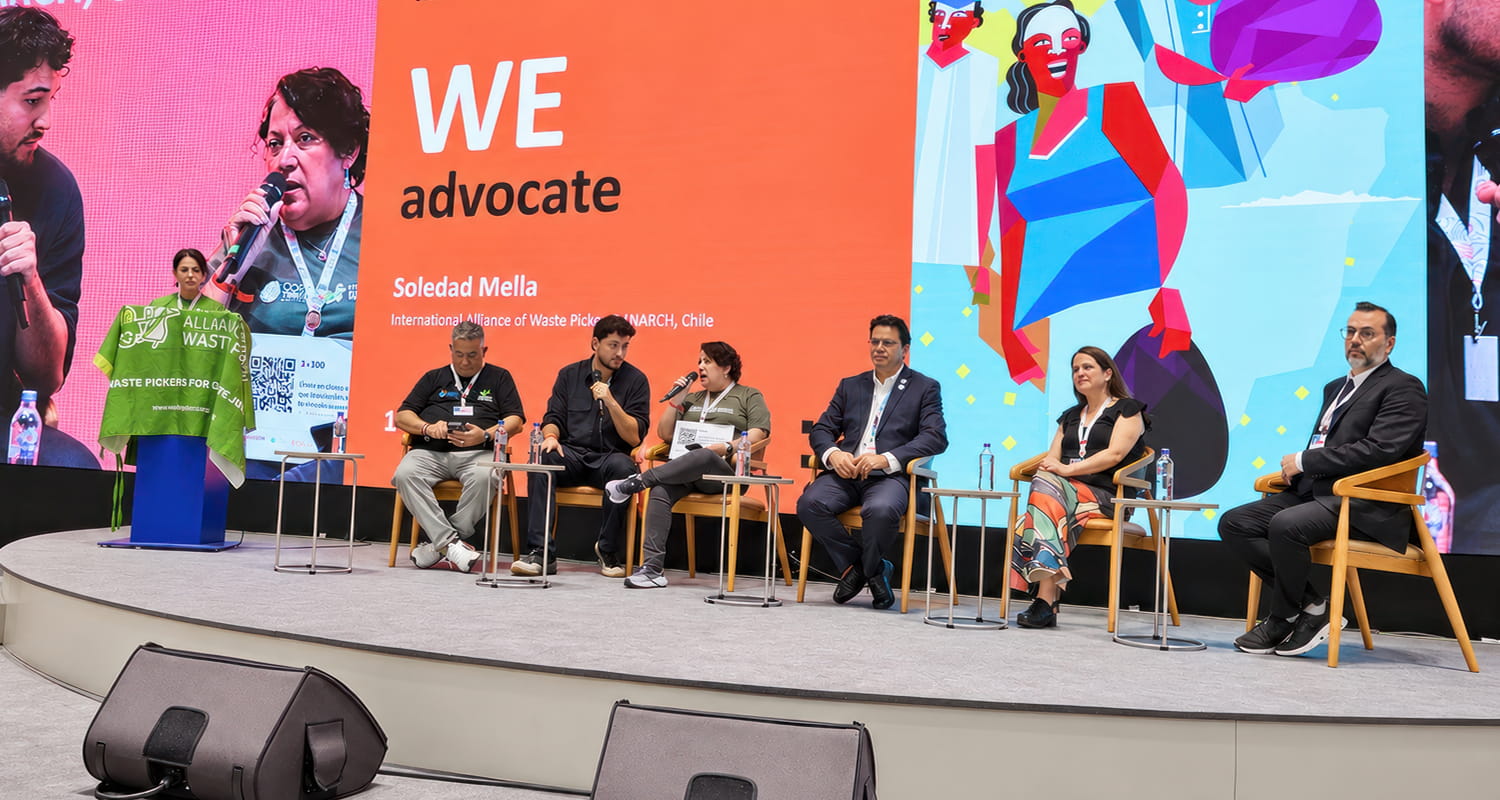
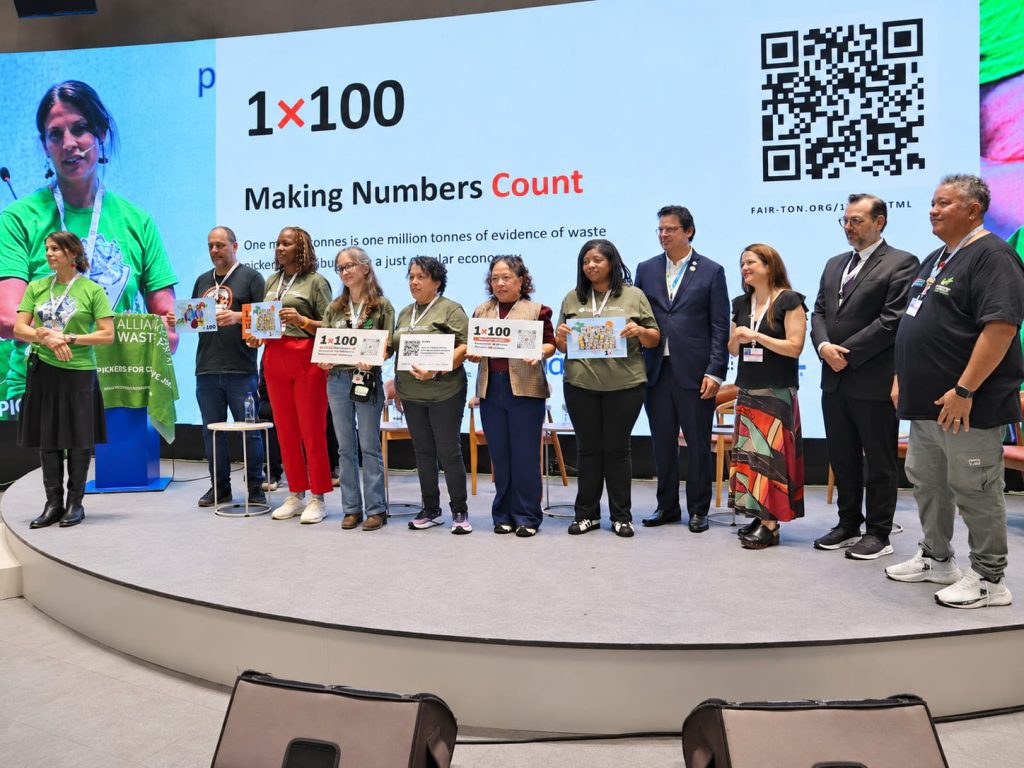
On Friday 13 November, in a room fittingly called “Our Common Home” at the Zero Waste Museum in the COP31 Blue Zone, the International Alliance of Waste Pickers, together with Fair Ton, the Global Methane Hub, Brazil’s Ministry of Environment and Climate Change, Fundación Avina and Unicatadores, launched 1×100: Making Numbers Count. The idea at its heart is simple: the people who recover the world’s recyclable materials must appear in the numbers that decide where climate action and climate finance go. Over 400 days, 100,000 grassroots waste pickers commit to recovering one million tonnes of recyclable materials, each tonne traced, verified and attributed to the workers who moved it.
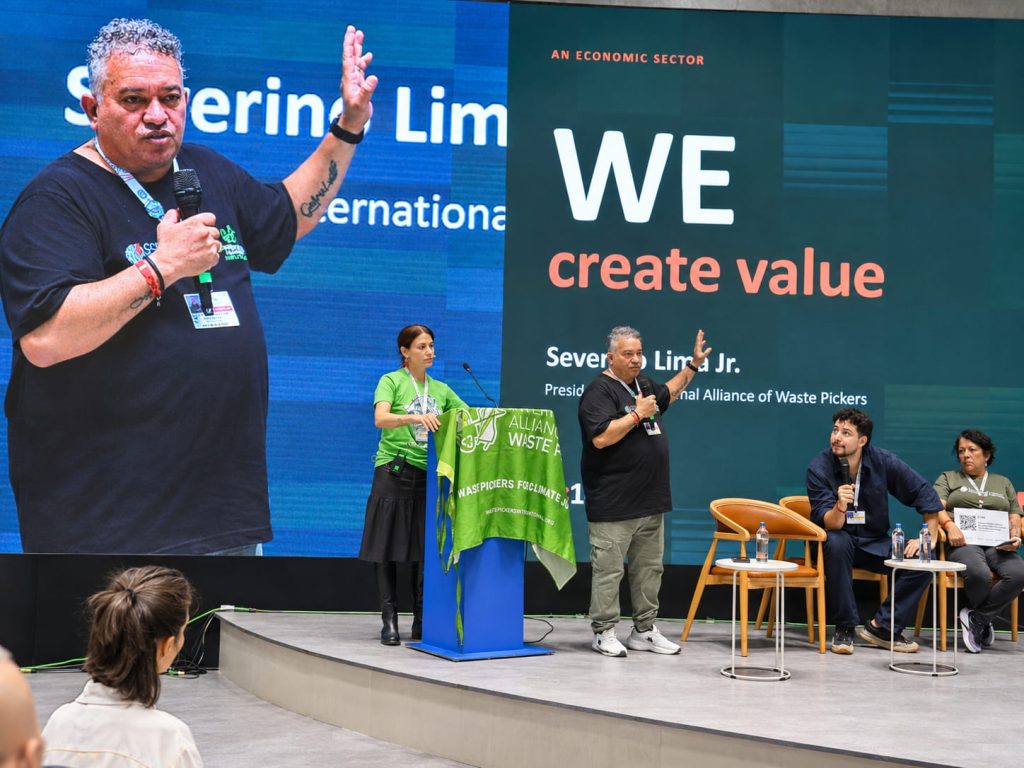
The launch brought together voices from the movement, government, philanthropy and climate diplomacy: Severino Lima Jr, President of the International Alliance of Waste Pickers; Soledad Mella, waste picker leader from Chile; Romina Malagamba, Director of Fair Ton; Carolina Urmeneta of the Global Methane Hub; Adalberto Maluf, National Secretary for Urban Environment at Brazil’s Ministry of Environment and Climate Change; and Carlos Silva Filho, Advisor to the COP31 Climate High-Level Champion.
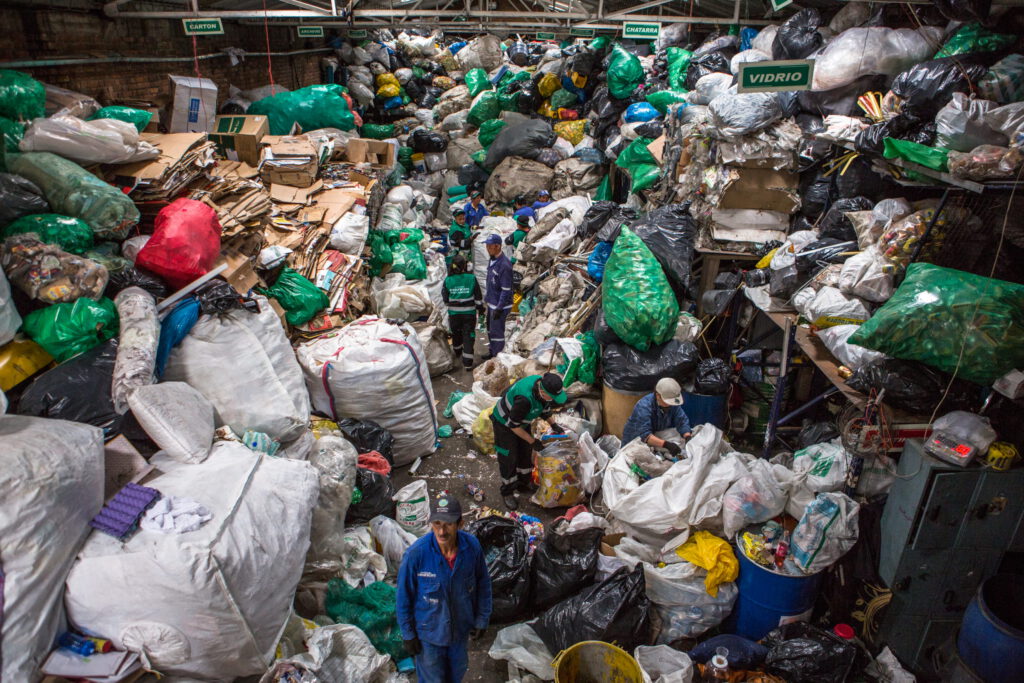
There is nothing new about the work itself. Every day, waste pickers recover materials that would otherwise end up in landfills, open dumps, incinerators or the environment, and much of the world’s recovery system rests on their shoulders. What has been missing is not the work, but its recognition. Because so much of this recovery moves through informal or poorly recorded chains, public and private systems cannot see its scale, cannot measure its climate benefits and cannot build it into policy. The campaign puts it plainly: the visibility gap is, at its root, a data gap. Or, in the four words the Fair Ton team uses: no data, no sector.
From one cooperative to infrastructure
1×100 rests on Fair Ton (Tonelada Justa), a climate initiative registered with the UNFCCC. It brings together a methodology to measure, report and verify avoided emissions, aligned with IPCC guidelines and the GHG Protocol; a data maturity ladder that helps cooperatives move from informal records to standardised, auditable data, led by waste picker “data champions”; and a public traceability platform with a greenhouse gas and methane calculator. Starting in Brazil, Chile and Ecuador, it aims to reach at least 100 organisations by 2028 and, through the Alliance’s networks, to expand into Asia and Africa.
The campaign was first presented in September at the Fair Ton Implementation Lab during UN Climate Week in Baku, where the route from Baku to Antalya was traced. Antalya is where that route arrived, and where 1×100 became a public, international commitment. Its logic fits in one sentence from the Fair Ton framing: a single cooperative can look like charity, thousands of cooperatives are infrastructure.
Many voices, one message
They spoke from very different places: government, philanthropy, climate diplomacy, research and the movement itself. Yet every intervention arrived at the same point. Recycling does not happen because of policies, platforms or pledges alone. It happens because waste pickers collect, sort and recover, day after day, in every city.
Carolina Urmeneta, of the Global Methane Hub, underlined that the waste sector offers some of the fastest opportunities to cut methane, and that those opportunities run through the hands of waste pickers. Adalberto Maluf drew on Brazil’s experience, where public policy has recognised catadores and their cooperatives, and argued that recognition must now be matched by investment. Carlos Silva Filho linked 1×100 to the COP31 Action Agenda on zero waste, stressing that no zero waste goal is credible without the workers who already make it happen.
Romina Malagamba presented the campaign as a question of method and of justice at once. “Waste pickers have always produced the evidence. It simply was never recorded in a language that climate policy recognises,” she said. “1×100 turns the daily work of thousands of cooperatives into verified, comparable data that governments and funders can no longer overlook.”
“For decades we have recovered what the world throws away, and for decades our work has been left out of the accounts,” said Severino Lima Jr. “With 1×100, the numbers are ours. We are not here to be counted as beneficiaries. We are climate workers, and climate finance must reach our cooperatives directly.”
Soledad Mella brought the figures back to the people behind them. “Every tonne carries the work of a woman, a family, an organisation,” she said. “When we measure our own work, nobody else can tell our story for us.”
Hearing a national government, a methane fund and the High-Level Champion’s office echo that message in the same room matters. Our movement has said it for years: there is no recycling without waste pickers.
What the numbers mean for a just transition
1×100 speaks directly to the pillars that guide the Alliance at COP31.
We are climate workers. Every waste picker avoids around 44 tonnes of CO2 a year, and every tonne of plastic recovered avoids, on average, 1.45 tonnes of CO2e compared with virgin production. With the waste sector responsible for around a fifth of global anthropogenic methane emissions, this is mitigation the world cannot afford to keep invisible.
Our data is ours. If verified tonnes become a climate asset, the question of who owns and governs that data is as political as the numbers themselves. Data about waste pickers’ work must belong to waste pickers and their organisations, and strengthen their position with municipalities, companies and donors.
Climate finance must reach us directly. Recognition only matters if it changes where the money goes. Among the outcomes envisaged since Baku is the purchase of verified tonnes with direct payment to cooperatives. That is the standard: finance that reaches waste picker organisations, not intermediaries who speak on their behalf.
A just transition counts everyone. The campaign recognises as a waste picker anyone who collects, sorts and sells recyclable materials, individually or through an organisation, and anyone who takes on another role within their cooperative or federation. That broad definition matters. A transition that measures emissions but narrows down who counts as a worker is neither just nor complete.
The next 400 days
The launch is the start. Over the coming months, waste picker organisations will register, trace and verify their tonnes, feeding a public monitoring system that will track participants, tonnes recovered, materials, territories and progress towards the goal. By the end of the 400 days, the aim is clear: one million tonnes on the record, and 100,000 workers who can no longer be left out of the climate equation.
Evidence-based. Waste-picker-led. A just transition that counts everyone.