By Nicolas Martinez
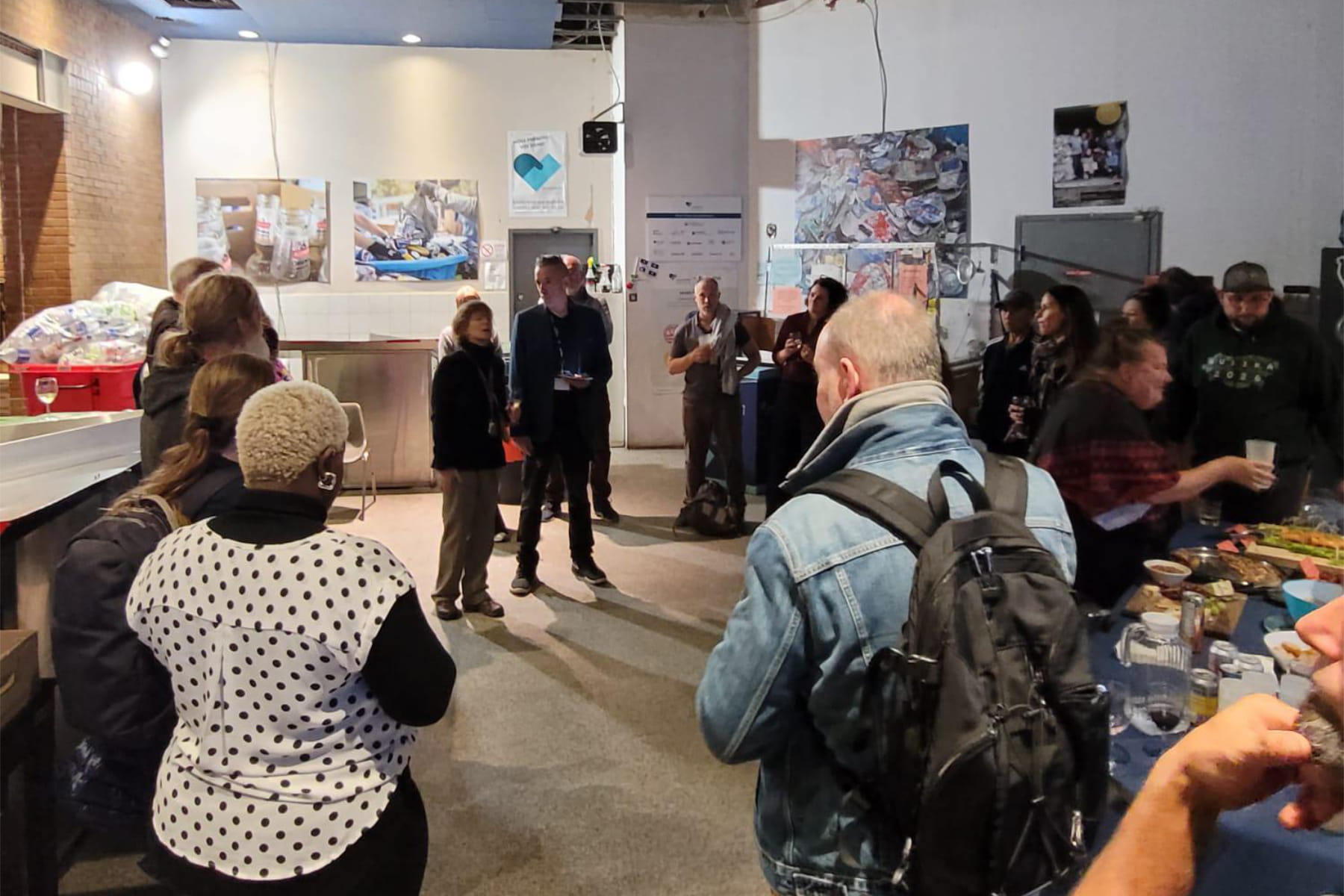
On the evening of Wednesday 30 September, fifty-four people gathered inside the Coop Les Valoristes depot, in the centre of Montréal: waste pickers, domestic workers, street vendors and home-based workers, cooperative members, organisers and allies. They came for Organising Across Informality: Worker Power and the Social and Solidarity Economy, an evening hosted by the cooperative together with the International Alliance of Waste Pickers, WIEGO, the International Domestic Workers Federation, HomeNet International, StreetNet International and the North America Waste Pickers Alliance.
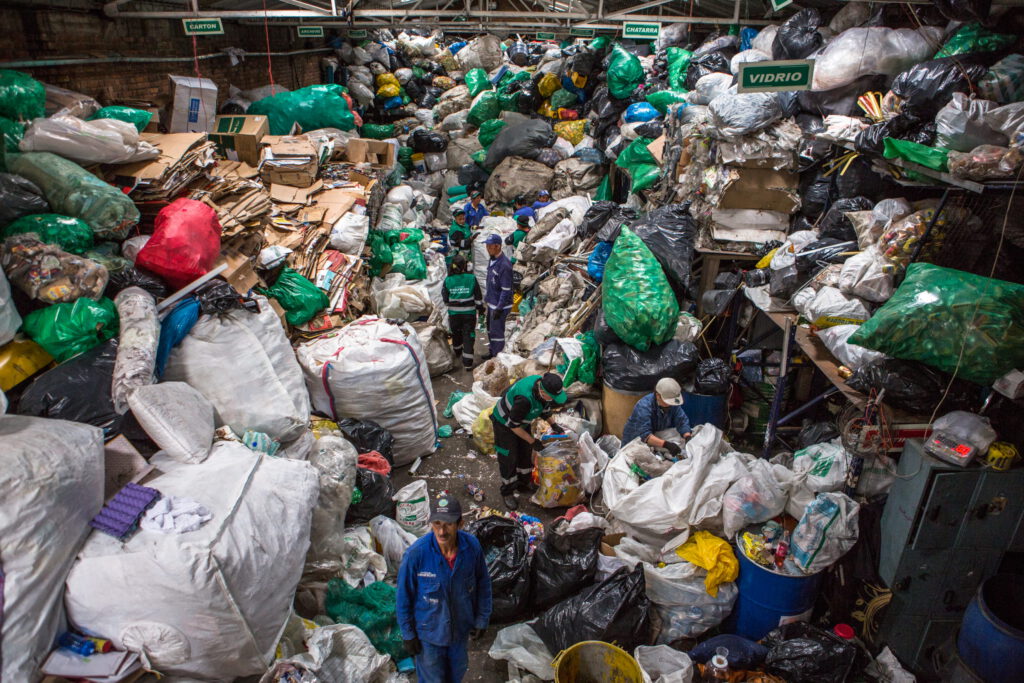
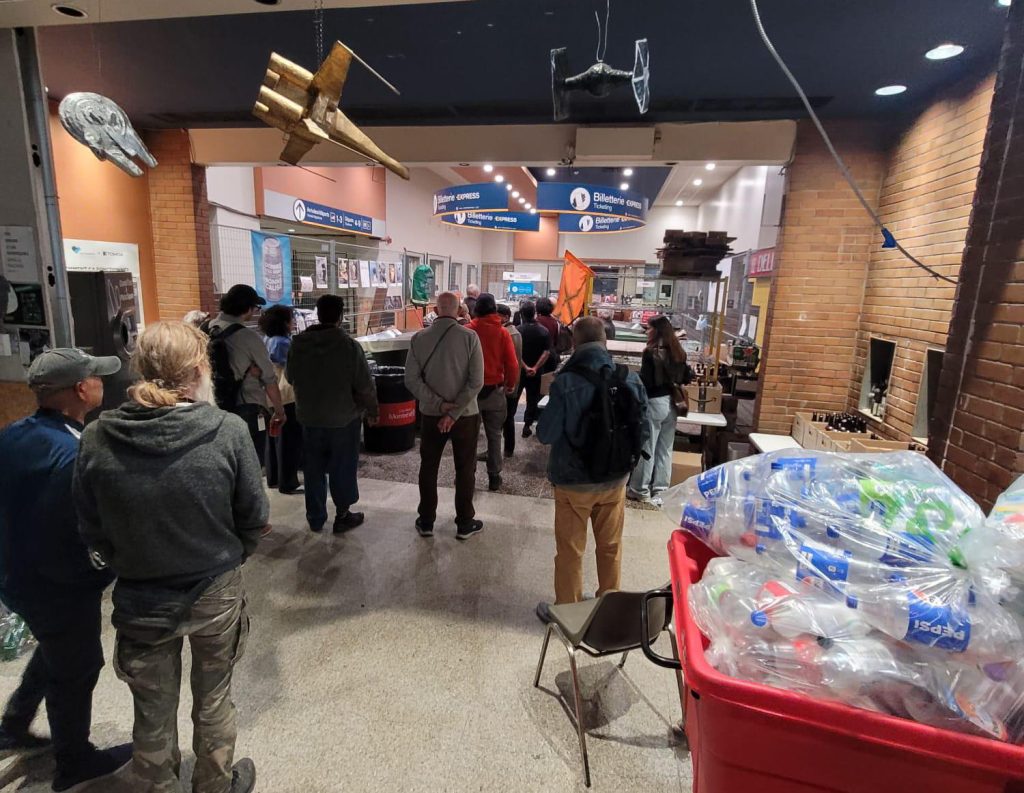
Les Valoristes is a solidarity cooperative built by and for the people who collect cans and bottles on the streets of Montréal. Before anyone took the microphone, its members walked guests through the depot and explained, in their own words, how the containers come in, how they are sorted and how the place is run. Marica Vazquez Tagliero, co-founder and director of the cooperative, then welcomed everyone and reminded the room that membership is open to all. Simon Paré-Poupart moderated the discussion.
Laura Alfers, International Coordinator of WIEGO, opened with a keynote that took the cooperative’s situation as its starting point. The depot is in a struggle over its space, and for Laura that fight reaches far beyond one building. “It’s a struggle that connects across borders,” she said. “It’s a struggle about whose work counts, and about who belongs in the city.” A depot like this one is where people earn a living and organise, and it also serves the city’s own environmental goals. Yet informal recyclers, here and elsewhere, keep subsidising the public with low wages and insecure incomes. What changes that, she argued, is collective organisation, and cooperatives show in practice that another way of working is possible, one “which the state must take seriously”.
Many sectors, one struggle
The panel asked how workers in each sector have moved from invisibility to collective power, and the answers had a lot in common. Adriana Paz Ramírez, General Secretary of the IDWF, told the long story of domestic workers’ organising, with examples from her own Bolivia and from Brazil, where domestic workers, many of them Black and Indigenous women, began organising in the 1930s with little support from either the labour or the feminist movement. Their organising rests on a few simple ideas: they speak for themselves, they are nobody’s victims or beneficiaries, and domestic work is work. Explaining why the eight-hour day matters so much, she shared the words of a domestic worker: “If I have a time to start work but no time to stop, I am not a worker, I am enslaved.” Many laws have been won since, but laws still have to be enforced, and for that no sector can walk alone.
Jemima Nyakongo, Interim International Coordinator of HomeNet International, described the same journey for home-based workers, most of them women working in or around their homes, either selling their own products or subcontracted at the bottom of global supply chains. For workers this isolated, organising starts close to home, in local groups and associations, and with something as basic as saying “I am a worker” instead of “I am a housewife”. Maira Vannuchi, Workers Education Manager at StreetNet International, joined remotely to explain how many street vendors’ organisations began as savings groups or childcare run by women workers. These are solutions built by the most vulnerable, she said, and they can become public policy, as long as formalisation is based on rights and recognises vendors as workers.
Members of the cooperative brought the conversation back to Montréal. They spoke about fifteen years of building the depot, about how isolating it can be to run a unique social economy enterprise that cannot survive on its own with the lowest handling recycling fee in Canada, and about the daily challenge of collecting containers in a highly technologic system that does not take into account the needs of waste pickers. Jemima recognised the same challenges among subcontracted home-based workers, who never know what work will come next.
Building power that lasts
Cecilia Lero, Program Manager at the Open Society Foundations, spoke about where workers’ power comes from: people acting together over time, the skills and knowledge to organise, access to space, from a physical depot to the rooms where decisions are made, material resources, and the ability to tell your own story. She talked about her mother, who was a domestic worker as a teenager, and her grandmother, a seamstress who also sold sweet potatoes at the market in the Philippines. Being morally right, having good data and voting for the right people all matter, she said, “but it’s not enough”. Her message to funders was to support the long-term infrastructure of movements rather than one-off projects.
In the closing round, Laura warned that tech oligarchs and authoritarian governments build their power by dividing people, which is exactly why evenings like this one matter. Adriana argued that the crisis of democracy sits underneath all the others, and that democracy has to be rebuilt from below, in cooperatives and unions, with internationalism as its compass. Jemima left the room with a challenge: informal workers hold up the global economy and are still treated as invisible, and that will only change for good if they organise across borders and sectors. And from the Montréal side of the room came the simplest advice of the night, in French: if you believe in something, do it, and do not let anyone tell you that you cannot.
The coming months will be decisive for the waste pickers of Les Valoristes and for the future of their depot. The city of Montreal has committed to relocating the cooperative within the coming months, though where exactly remains uncertain. Nevertheless, that evening made one thing clear: they will not face it alone!