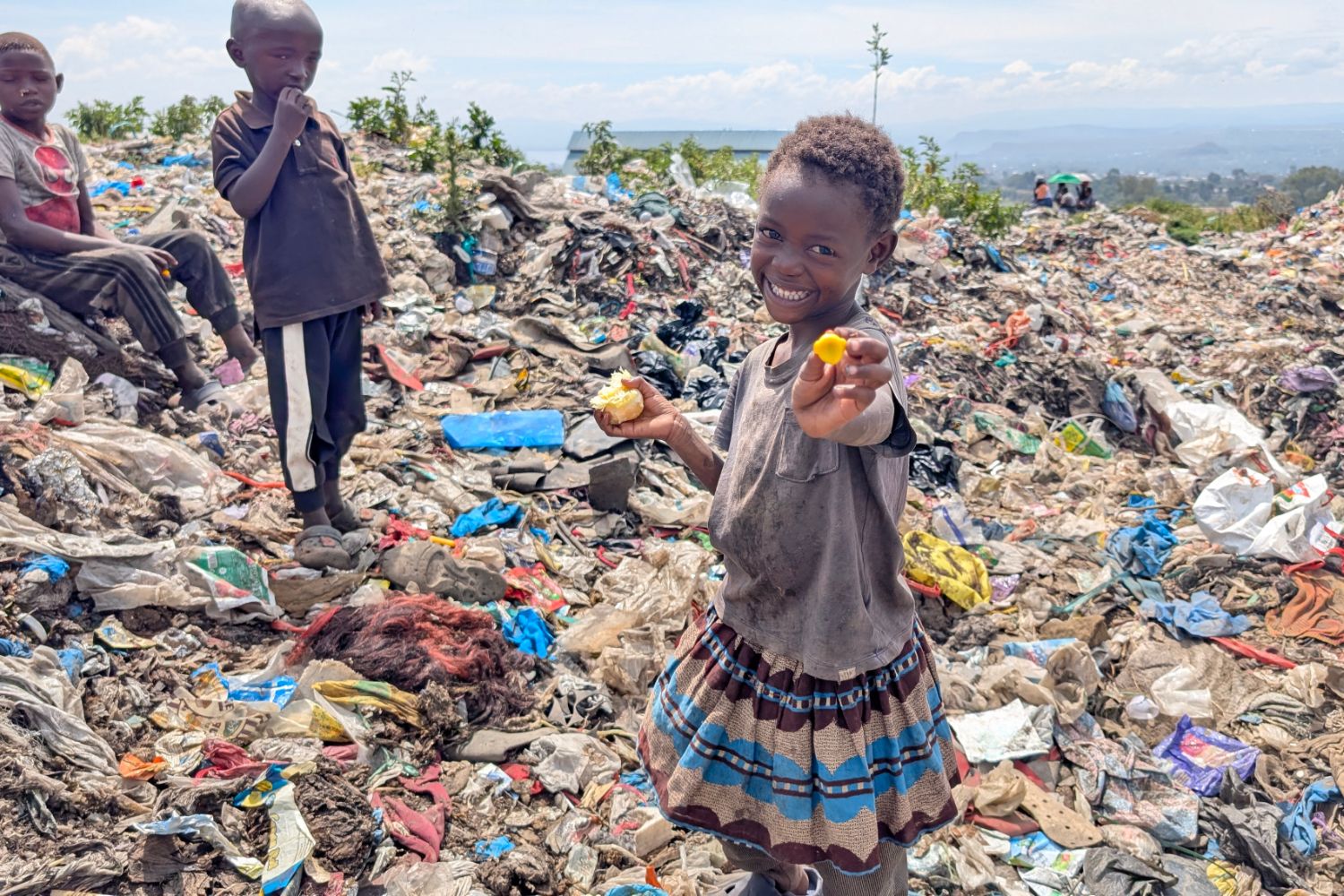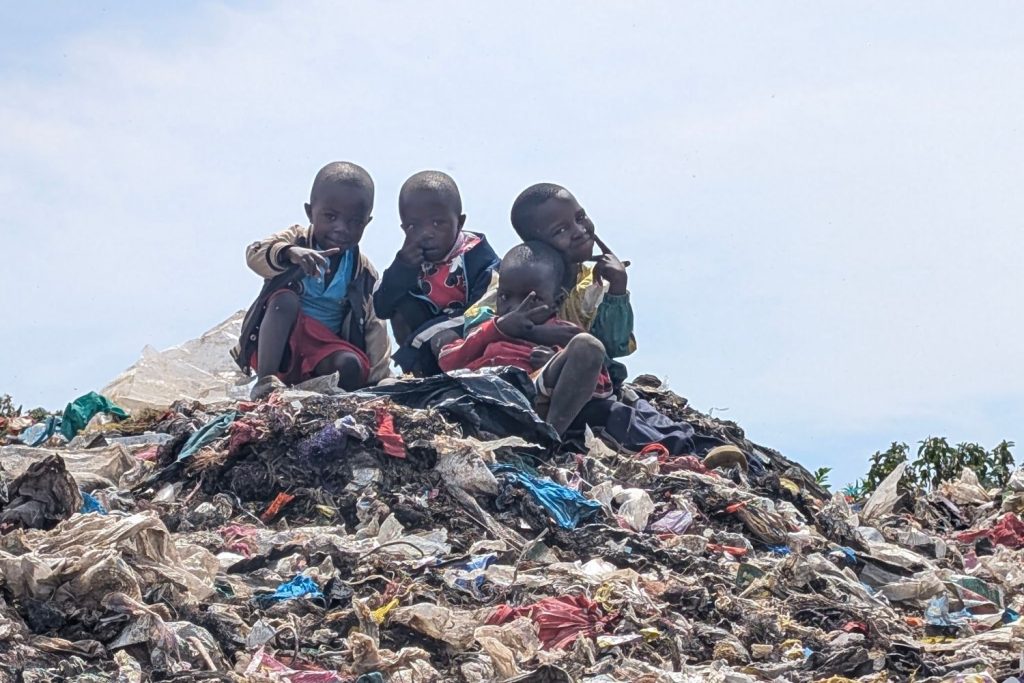
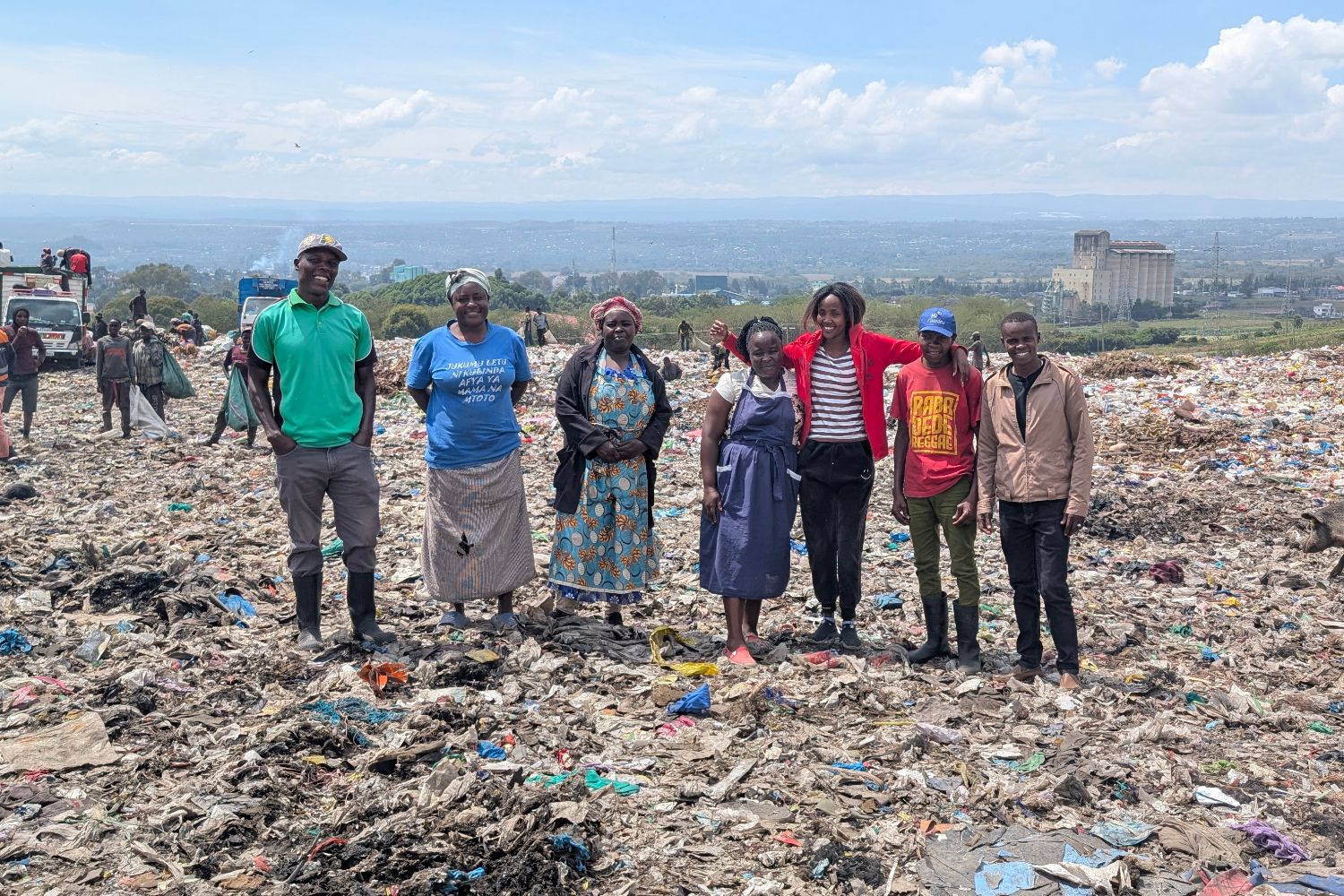
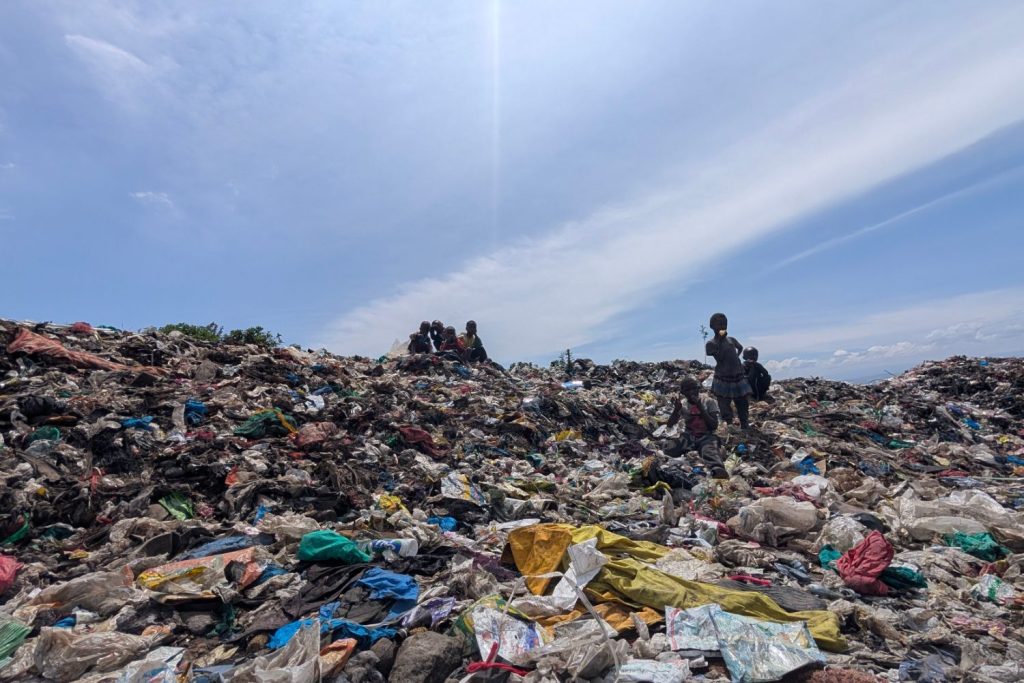
Smoke settles in the lungs. Around it, once the eye has adjusted to the density, Nakuru gets on with its business and mostly manages not to look at the dumpsite it keeps at its own centre, where nobody is passing through. The sun lands dull on the iron sheets, the same sheets that throw back the laughter of the children.
Rachel Muturi cannot tell how old she was when she started sorting. “When I was born, I found my parents already working as waste pickers at the dumpsite,” she says. “They were among the first people to collect there.” Those were the years when aluminium and scrap metal were the only things worth the walk home, plastic still waiting for its price. She often says she understood plastic before she spoke English, and she means it literally, since sorting came first and speaking long afterwards. “As a child, it was my first school,” she says, and the lessons were practical: stand beside your mother, bring food home, understand that work is work even when nobody calls it that. Shame was not on the syllabus.
Her parents did not want her at the dumpsite. She is the last born, and the last born gets guarded. She went anyway, because her mother was there and the work goes faster with two hands more, and because of what the day sometimes handed her on the way: fruit, sweets, the small salvage of a child. “For me the dumpsite was a place of discovery,” she says. It fed her family, it frightened her, and it was hers.
It would be easy to tell a story of leaving, of getting away from the smoke and the uncertainty, but that is not the story Rachel chose. The dumpsite was never only a place to earn the day’s bread; it was where her way of seeing the world was bent into shape, among the things other people ignore or throw away and that the future will have to stand on anyway, invisible to most, abrasively familiar to her. “The dumpsite didn’t just raise me. It built me.” Nakuru is where her memories live and where her politics were formed, where the need for recognition stopped being an idea and became something that happened to her and to the people beside her. When she says “this is home”, she is telling you where she speaks from. She crosses borders now and represents waste pickers across an entire continent, and she still speaks from inside that history.
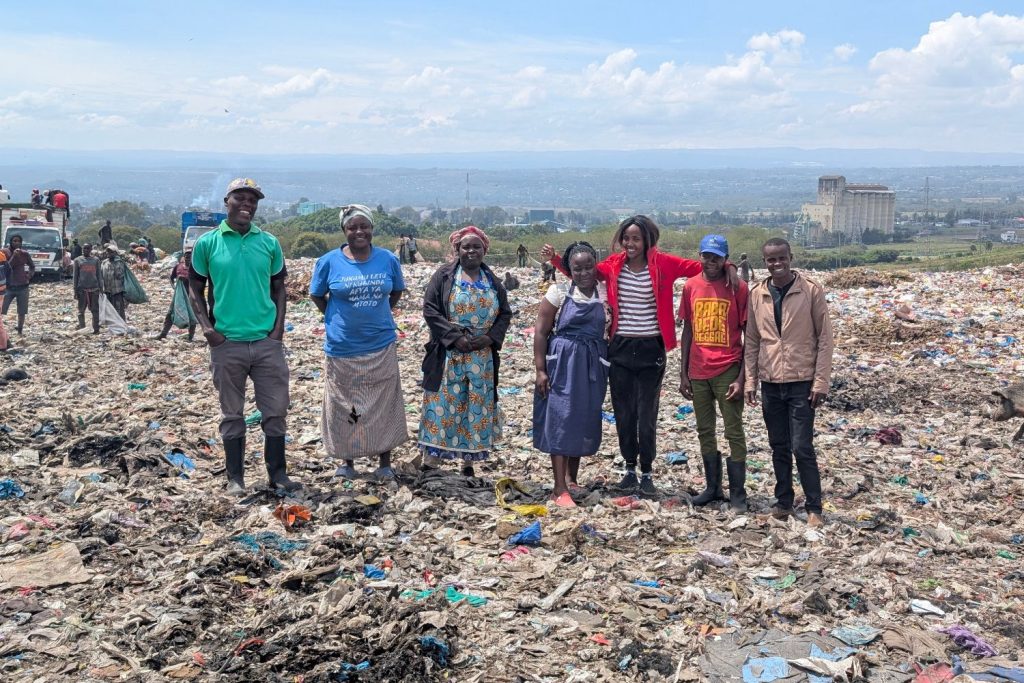
At fourteen, another space opened. An unexpected chance put her on a runway, and for the first time she stood in a room where attention was organised and rewarded. She won Miss Nakuru County. That room was not built for someone like her, and it gave her a new position on what it means to be looked at. On the runway, being looked at came with applause. At the dumpsite it came with a verdict, and the verdict fell on her whole community, not only on her. “People look at you before they listen,” she says, and she means both places at once. In both places she was being read before she could open her mouth, and in both places she had to decide whether to accept the reading or interrupt it.
Modelling did not give her a way out. It gave her a second angle on the same mechanism. Heels or gumboots, lights or dust, she was the same person carrying the same story, and the only thing that changed between the two rooms was the price each room put on her before she opened her mouth. That is the part she keeps returning to. Worth is not worked out after the work has been examined, it is assigned in the first second by whoever happens to be looking, and the examination comes later if it comes at all. On the runway the figure came out high. At the dumpsite it came out at nothing. Neither figure had much to do with what she could actually do. Children there asked her to teach them to walk a runway, and what they were asking for was not a career but a way of being looked at that did not arrive with a discount attached.
A runway is a way out, and for a while the way out was there for the taking. What kept her from it was older than any applause. Under the noise of the clapping, Rachel’s memories went on sounding. Memories from a childhood that has never stopped living alongside her. Memories of one calm night in Nakuru, broken open by screams she can still hear. The family went outside and found a house on the dumpsite burning. A home made of nylon and plastic bags does not so much burn as disappear. That house stood next to theirs, and the people running with water came through her family’s compound to reach it. Inside were a single mother and her baby son, a boy about Rachel’s own age. “I can still remember her pain,” she says. People tried for a long time to reach the boy. They did not succeed. His mother died some time later, after an illness.
Before it was put out, the fire took the fence of Rachel’s own house. “We were this close to becoming victims ourselves,” she says. “I still remember that night as if it happened yesterday.” Everything she says about safety comes out of those hours, and so does the reason the runway was never going to become a career. “Safety is not a favour. It is a right.” The fires keep coming. Some waste pickers in Nakuru live in iron sheet houses now, and iron sheets do not burn. Rachel is precise about where those houses came from: volunteers, well-wishers, people who decided to help. No authority arrived to make it happen. Justice, for her, begins with things you can touch. A house that does not catch. Help when it does. Recognition on paper. And the dignity of growing up without thinking that danger is simply what survival looks like.
The turning point was organising, and it began badly. Early 2020, COVID-19 at its peak, around twenty waste pickers, almost no material left at the dumpsite and no reason for anyone to be hopeful. She was asking people to think about a future while they did not know where the next meal was coming from. “It was very difficult,” she says, and then says it again. There were stretches when it looked like the whole effort was failing. It did not fail. Associations were formed, meetings with local government began, and people who had spent their lives being talked about started doing the talking. Slowly, what they had in common stopped being the emergency and started being the future.
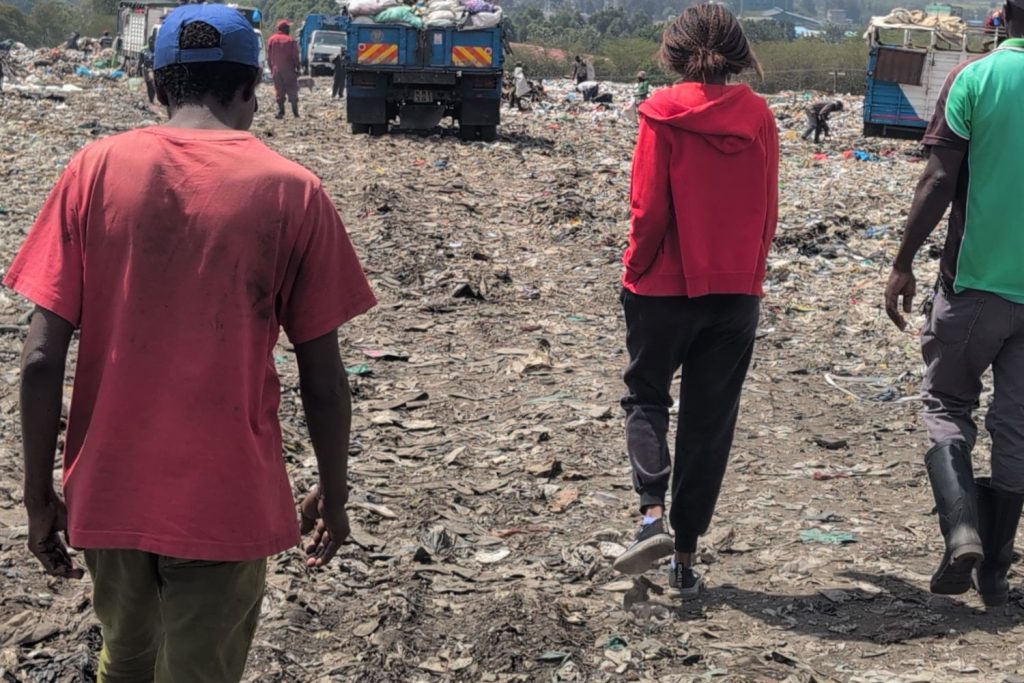
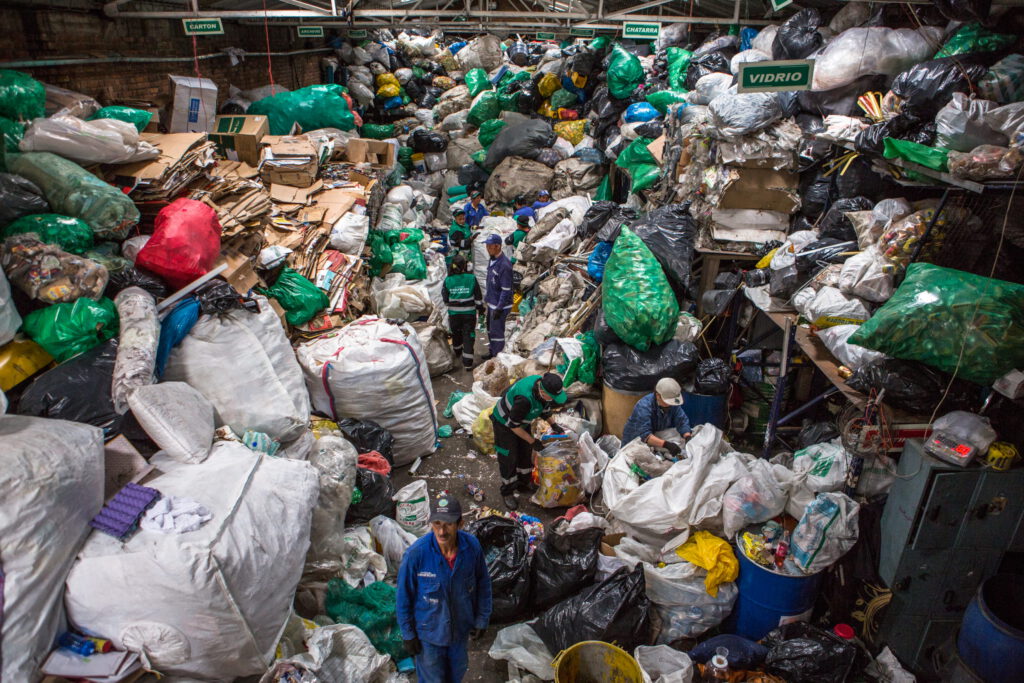
That future was never a new occupation. It was the one they already had, finally said out loud, and it is where Rachel’s argument about waste pickers everywhere begins: not a problem waiting for a solution, but the solution that has been working on the ground for decades with nobody willing to call it that. Long before recycling acquired targets, funding lines and a vocabulary, waste pickers were pulling material back out of the stream and cutting emissions that nobody was counting. The suspicion that they are idle or disposable has outlived all the evidence against it, and it falls apart within a day of walking beside them. It is the pricing again, running at the scale of an industry: the figure is set by the look, and the look was settled long before anybody examined the work. None of this rests on hardship. The material recovered, the emissions avoided, the systems kept running: that value would be exactly the same if the people doing the work had never gone hungry, and it is the value, not the need, that has gone unpaid. “We are the hardest workers you will ever meet,” she says.
An argument like that has to be carried into rooms where it can be heard, and the news that Rachel would be the one carrying it, as Africa Regional Coordinator of the International Alliance of Waste Pickers, came by email, at night, while she was alone in her room and out of the habit of checking. She read it and did not stop to think: she went to her parents’ room, woke them and stood there crying without managing a word, while her mother asked what was wrong and then settled on the idea that she must be pregnant. To stop that, Rachel said it out loud, that she was the African coordinator, which meant nothing to them, and she understood quickly that explaining would not fix it, partly because she had never told them she had applied. Her father’s first response was a warning. Be careful you are not being scammed. Recognition does not reach people like them by email, and he had decades of evidence for that.
He had his reasons. There was a month to prepare and a flight to book to Peru, the first flight of her life, for a job nobody in that house had known existed. She almost did not make it, held up by documentation problems at the airport. Her parents came with her. So did her fellow waste pickers, including her chairman. They wanted to watch the plane with their own eyes. That was when it started to sink in, for all of them.
From outside, the distance between the Nakuru dumpsite and a regional coordinator’s post looks impossible to cross. From inside her life it is one road, and the decision that laid it is easy to locate. What she had learned about being looked at left her two things to do with it. She could keep working on her own image, one room at a time, until the figure assigned to her came out high enough to live on. Or she could go after the thing that sets the figure in the first place, for everybody who does the work. The first would have been a career. She took the second, which is why the job she does now is about rights rather than image. Reading a situation quickly, holding on when there is nothing to hold, negotiating with people who would rather not negotiate: those are dumpsite skills and she uses them at a continental scale, and in conference rooms she is still read before she speaks, and still knows what it costs to turn being looked at into being listened to.
What she carries she also hands on. Ask her what she would say to the girl who is at the dumpsite this afternoon, sorting in the same smoke she grew up in, and the answer arrives without decoration: what surrounds you does not decide what is possible for you. Hold on to whatever you are dreaming, and while you hold it, learn something, say something, find the others and stand with them. Dreaming on its own has never been enough, in Nakuru or anywhere else.
What she is afraid of is not the work. “I am still afraid of failing. Not necessarily failing myself, but failing the people who believe in me.” She asks herself whether she is doing enough, and she asks it because the looking has changed direction. For most of her life it came from outside and arrived with a price attached. Now it comes from Nakuru, and Nakuru does not price her. It expects her back. “I don’t want the opportunities I have now to take me so far away that I forget the people and the struggles that brought me here.” There the sun still lands dull on the iron sheets, and the sheets still give back the sound of the children. She never left. This is home.