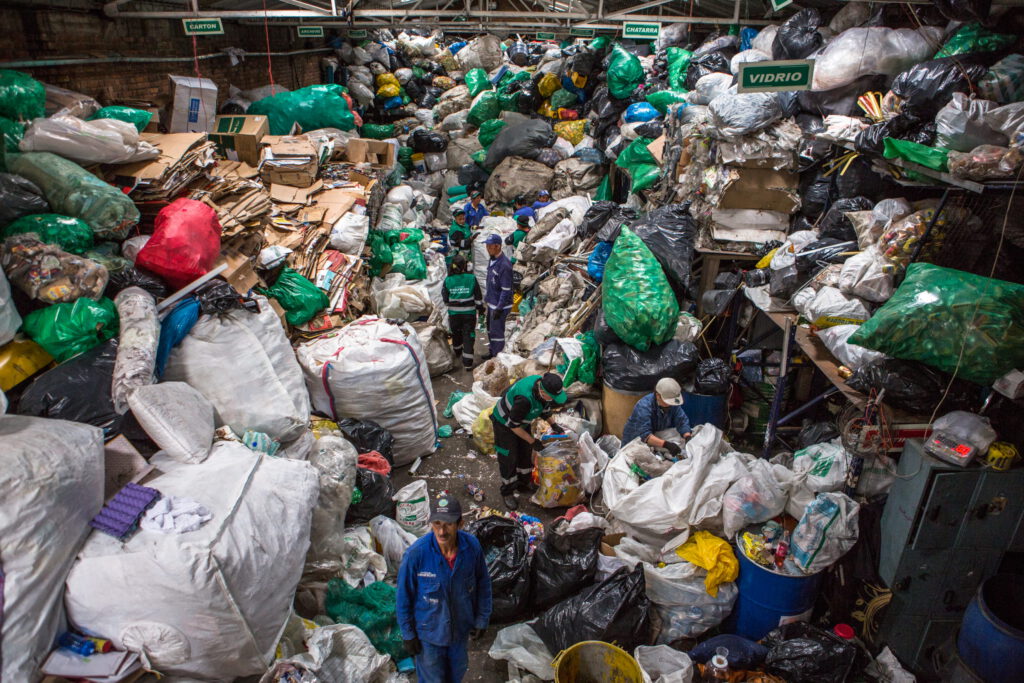

Organizations representing workers in informal employment – waste pickers, home‐based workers, street vendors and domestic workers, including migrant workers – recognize the social and solidarity economy (SSE) as a critical pathway to improving livelihoods, strengthening collective organization and advancing decent work. This is particularly important given that women are disproportionately represented in informal employment due to structural inequalities, including limited access to opportunities and persistent gender and cultural biases.
For global networks such as HomeNet International (HNI), International Alliance of Waste Pickers (IAWP), International Domestic Workers Federation (IDWF), StreetNet International (SNI) and Women in Informal Employment: Globalizing and Organizing (WIEGO), SSE entities including cooperatives, associations, mutuals and self‐help groups have served as practical economic infrastructures through which workers organize production, stabilize incomes, access resources and strengthen their collective voice.
We are concerned that growing global uncertainty is placing renewed strain on international cooperation at a time when multilateral efforts, including those of the International Labour Organization (ILO), remain essential to advancing decent work for workers in informal employment.
Across the world, workers in informal employment face severe decent‐work deficits: unstable incomes, limited access to social protection, restricted bargaining power and persistent barriers to formal recognition as workers. Today, 58% of the global workforce (representing two billion people) are informally employed – in sectors such as waste picking, home‐based work, street vending, domestic work and care services.
For these workers, the social and solidarity economy represents far more than an aspirational concept. For millions of workers in informal employment, SSE entities function as concrete pathways to improve incomes and livelihoods. Through cooperatives, associations, mutuals, self‐help groups and other collective economic organizations, workers are able to coordinate production, reduce costs, stabilize incomes, access solidarity‐based finance and build forms of social protection where formal systems remain inaccessible. These collective and solidarity‐based economic arrangements are particularly crucial for women in informal employment, who face structural inequalities, lower incomes, greater exposure to violence, harassment and discrimination, and a disproportionate burden of unpaid care work.
The experiences of workers in our sectors demonstrate how collective economic organization strengthens workers’ bargaining power with municipalities, governments, employers and enterprises. By pooling resources, knowledge and infrastructure, SSE entities help workers overcome structural barriers that would be impossible to address individually. They do this while reinforcing democratic governance and collective representation.
Our organizations have welcomed the recognition of cooperatives and the wider social and solidarity economy in international labour standards, such as ILO Recommendation 193 on the Promotion of Cooperatives, 2002, and Recommendation 204 concerning the Transition from the Informal to the Formal Economy, 2015. The 2022 ILO Resolution concerning Decent Work and the Social and Solidarity Economy and the 2023 and 2024 UN resolutions to promote the social and solidarity economy also reflect important milestones in recognizing the role of collective economic models in advancing decent work. In addition, the 2025 ILO policy guidelines for the promotion of decent work in recycling highlights the importance of SSE approaches in supporting workers in informal employment, particularly waste pickers.
Leadership within the UN system, particularly through the ILO’s work with its constituents and partners, has played a critical role in furthering research, policy dialogue and international cooperation to advance the social and solidarity economy. We greatly appreciate the partnership that has developed over the years between
our global networks and the ILO, including its Cooperative and Social and Solidarity Economy Unit, and we look forward to continuing and deepening this collaboration in the years ahead.
In the context of tightening fiscal space, competing priorities and heightened global uncertainty, it is essential that the progress made in recognizing and supporting the social and solidarity economy not only continues but expands.
The social and solidarity economy should not be understood as a marginal or secondary approach to economic development. Rather, it represents a set of existing economic practices through which workers in informal employment collectively build more stable livelihoods, strengthen their rights, and contribute to more inclusive and resilient economies and societies.
In this sense, promoting and defending the social and solidarity economy is intrinsically linked to advancing gender equality, not only by expanding women’s economic opportunities, but by contributing to the transformation of structural conditions of exploitation and discrimination that underpin both informal employment and gender inequality.
Maintaining and strengthening policy, legal and programmatic support for the social and solidarity economy within the ILO’s mandate and across the broader multilateral system is essential to ensuring that pathways toward decent work for millions of workers in informal employment remain grounded not only in market mechanisms but also in solidarity, democratic participation and collective economic organization.
We urge governments, workers’ organizations, international institutions and development partners to boost the policy and institutional frameworks that will enable the social and solidarity economy to deploy its full potential.
About HomeNet International
HomeNet International is a global network of membership‐based workers’ organizations that represents more than 1.3 million home‐based workers, from 71 organizations spread across 30 countries.
Visit www.homenetinternational.org.
About IAWP
The International Alliance of Waste Pickers (IAWP) is a global union of 50 waste picker organizations, representing more than 460,000 workers across 34 countries. The IAWP is committed to advancing the rights and strengthening the organizing efforts of waste pickers.
Visit www.globalrec.org.
About IDWF
The International Domestic Workers Federation (IDWF) is internationally recognized as a Global Union Federation. Made up of 93 affiliates from 70 countries, the IDWF serves a membership of over 675,900 domestic/ household workers. Most are organized in trade unions and others in associations, networks and worker cooperatives.
Visit www.idwfed.org.
About StreetNet International
StreetNet International is a global organization of committed informal traders, with the goal to promote and leverage an autonomous and democratic alliance of street vendors, market vendors, hawkers and cross‐border traders. StreetNet International is present in more than 50 countries and represents over 700,000 members worldwide.
Visit www.streetnet.org.za.
About WIEGO
Women in Informal Employment: Globalizing and Organizing (WIEGO) is a global network focused on empowering the working poor, especially women, in the informal economy to secure their livelihoods. We believe all workers should have equal economic opportunities, rights, protection and voice. WIEGO promotes change by improving statistics and expanding knowledge on the informal economy, building networks and capacity among informal worker organizations and, jointly with the networks and organizations, influencing local, national and international policies.
Visit www.wiego.org.